
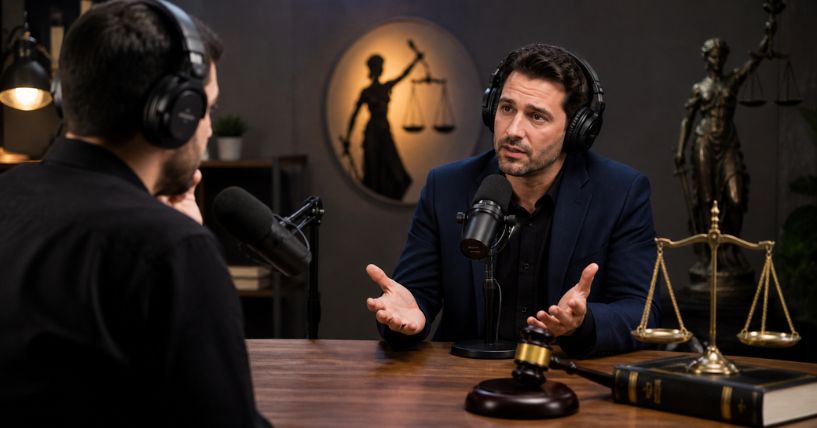
Over the last few years, podcasts have gained a lot of popularity as a way to tell stories and provide commentary and debate. Many podcasters use their guests to tell their own personal story or give their viewpoint on a third party’s actions, etc. With this freedom comes the responsibility, especially when talking about people or organisations. Many would be podcasters ask if the podcast guest could be liable for Defamation and Trade Libel.
The answer is affirmative, but the laws may vary. In Australia, including Western Australia, defamation is a real concern, allowing anyone harmed by false statements to pursue civil action, and the only way to avoid it is by consulting knowledgeable Civil Litigation Lawyers Perth.
In Australia, an action can be called defamation when a person states something that damages the reputation of another because it subjects one to ridicule, hatred or contempt. This may occur through numerous means, such as print, web, social media or even through a podcast. The most important legal considerations are:
1. Publication to a third party – The statement is expressed to another person. This is nearly always fulfilled in a podcast where episodes are made available publicly.
2. Identification – The individual spoken about during the podcast must be identifiable directly, either through names or indirectly through the perception of the audience.
3. Defamatory meaning – The disclosed message should not only be offensive but must harm the reputation of the spoken individual.
When these elements of defamation claim are satisfied, a podcast guest might be defamed and found liable even though they are not the host. This especially holds in case the guest provides false information on certain persons or companies, and the information becomes popular among many people.
In contrast to personal communication, what is said by the guests of a podcast is incorporated into a public broadcast. Legally speaking, that is, publication to a third party, and it predisposes a plaintiff to bring a civil action. Although the issue may not have been published again, even if the problem was only once published, in case the material is available in the future, downloaded or indexed over the Internet, the element of publication is still present.
Another fact worth mentioning is that the truth is a defence to defamation. In case the statements made are materially true, there is a chance that the accused will not be held liable. This defence, however, is not always easy to prove, in that it must be backed with credible evidence to the statements.
Although this blog specifically targets guests, the fact remains that hosts and producers of podcasts can also be co-liable. Under the Australian legal system, anybody who participates in the publishing of defamatory content (with or without saying it) may find themselves within a defamation lawsuit. This explains why editorial control or disclaimers are adopted by most podcasters, and guests are usually advised to remain factual.
You should not live in fear, but be conscious, in case you are invited on a podcast:
1. Keep it factual – When you are sharing any sensitive information, be sure that the facts are correct and that they have evidence. Unverified or anecdotal accusations are a dangerous thing.
2. Never speculate on people – Opinions will be least likely to be defamatory when they are obviously subjective and not true statements of fact.
3. Learn about the aspects of defamation – It is better to know how publication, identification and defamatory impact work to avoid lawsuits.
4. Seek legal advice – In case you are not sure that your material may amount to defamation, you can talk to Perth Defamation Lawyers and gain clarity and remedies against risks.
Early legal advice not only covers you in case somebody claims against you, but it also makes you understand what your rights are in case somebody complains that you damaged their reputation. Lawyers who specialise in defamation cases can look at statements for loopholes that could lead to a defamation lawsuit, and will give you advice if you do not follow.
In such a case, it will be important to employ the services of learned Civil Lawyers Harrisdale who have experience in the field of media and defamation law.
In conclusion, yes, a podcast guest can be sued for Defamation Vs. Injurious Falsehood if they fit the elements of this claim under Australian law, and their speech is harmful and untrue. The danger exists, and so does the chance to minimise the danger by proper speech and knowledge of the law. In any case, before going on a show, it is better to seek the advice of defamation lawyers Perth and save some time, stress, and possible lawsuits.
The knowledge of the legal context will enable creators, both guests and hosts, to operate with responsibility and confidence in this dynamic medium.
